Exploring the Next Frontier in Nanoscience
Q&A with Andrei Faraon, director of the Kavli Nanoscience Institute at Caltech

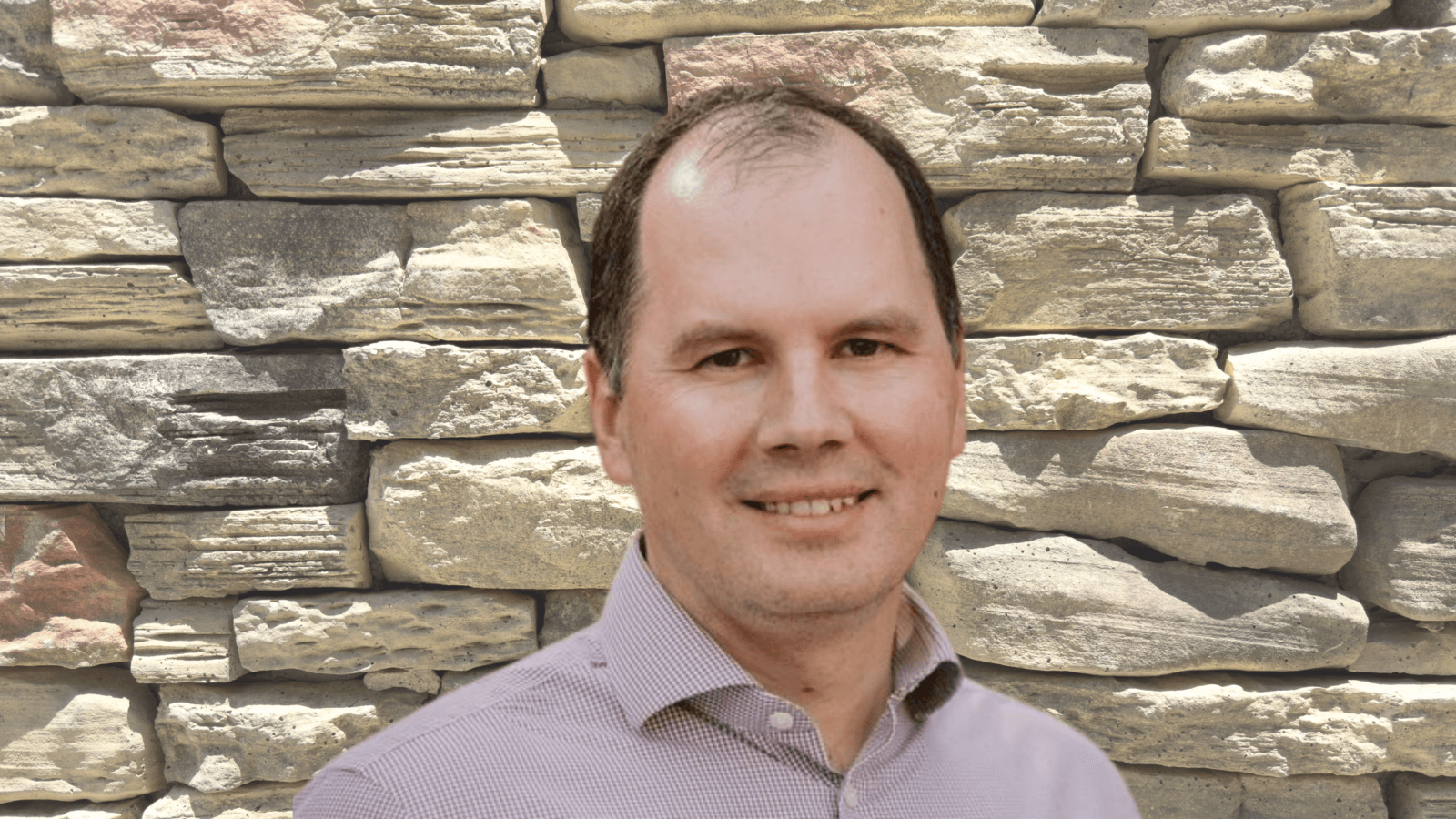
Credit: Photo by Jamie Kimble @verilyimagery
Caltech engineer and physicist Andrei Faraon is the new Fletcher Jones Foundation Director of the Kavli Nanoscience Institute (KNI), an interdisciplinary hub for nanoscale fabrication and discovery. As he steps into the Director role, Dr. Faraon is focused on advancing the tools and techniques that make nanoscale discovery possible and deepening the Institute’s educational impact. In this conversation, he shares his perspective on where nanoscience is heading – and how KNI is helping to push the next frontier.
As you embark on your new role as director of KNI, what scientific opportunities in nanoscience excite you most?
What excites me most is pushing the next frontier in nanoscale science and engineering. In my own work, I’m excited about the quantum devices we make where single atoms interact with light, and to make those interactions possible, we need to sculpt structures that are merely hundreds of nanometers in size. KNI administers a nano-fabrication facility, and thus it provides the tools that allow us to make those kinds of devices and to make this research possible.
Beyond my lab, we’re making optical devices that are reaching the point where we can imagine custom 3-D structures with features smaller than a wavelength of light. That opens new doors in optics and optical components that have custom functionalities with specific applications, like very small cameras that can also identify the chemical composition of materials.
Additionally, KNI supports a wide range of research across Caltech, from quantum devices and superconducting thin films to work with graphene and other materials that need to be etched at the nanoscale, to medical devices that combine nanoscale features over large areas. Across these fields, the goal is the same: to keep pushing the boundaries of what can be made at the nanoscale.
We’re not quite at the next frontier yet, but we’re trying to push KNI to reach the next level of nanofabrication.
What is your strategic vision for KNI over the next several years? What are ways to engage your students around this vision?
Our strategic vision consists of maintaining a state-of-the-art nano-fabrication facility while training the best researchers, and we want to strengthen both sides. As a university, people are what’s most important. That includes our students (or trainees), whom we want to develop as the best in the world in nanoscience. Also, we want to ensure that our “services.” – in other words, our lab – operate as a world-class facility.
We are very research-oriented, so our role is to provide both the tools and the right environment for people to conduct their research.
What are the main challenges you are faced with?
The typical challenge in overseeing a lab is simply keeping everything running smoothly. Managing a cleanroom facility is a bit like owning a home – there’s always something breaking so we must constantly ensure everything is functioning properly.
Another challenge is funding new equipment. Some of our most essential equipment is not super-exciting, like a new, fancy TV, but it’s vital for daily operations – much like a dishwasher. Securing funding for those bread and butter-type instruments can be challenging when funders want to fund the fancy TV but not the dishwasher.
There is also the broader funding landscape. Because our users rely heavily on federal grants, shifts in government funding or policy directly impact us. Maintaining stability amid those changes is an ongoing challenge for any shared research facility.
KNI and Caltech have a reputation for enabling bold, high-risk ideas. What are your thoughts on balancing risk and discovery, both in your own research and in guiding KNI?
My hope is that KNI and Caltech are in the high-risk, high-reward arena. If a research project can be done equally well somewhere else, then we shouldn’t do it. Instead, we should focus on the things that only we can tackle. That’s the spirit of Caltech and KNI: exploring the next frontier rather than repeating what’s already been done or can be done elsewhere.
In practice, that means supporting users, including faculty members and students, who are pursuing bold ideas, while ensuring the facility remains state-of-the-art to enable that research.
In a competitive field, how can the next generation of students and scientists be prepared to thrive?
Our goal is to bring the best out of everyone. We already recruit the top talent from around the world. So, our role is to provide the right environment, tools, and mentorship that allow students to grow into their roles as scientists, engineers, and researchers.
Developing scientists is like tending a garden – we need to ensure there’s good soil, sunlight, and care, but it’s the plants’ role to then grow and produce flowers.
At KNI, we’re aiming to produce independent researchers. Our grad students and postdocs start by training and being mentored by more experienced peers and staff, then developing their own projects as they gain independence.
Finally, do you have any concluding remarks you would like to offer?
I think we should do a better job of communicating the value of science to the broader public. We are in a community where people are generally excited about science, so there’s a mismatch between us and those who are skeptical of it. These two communities don’t intersect very much, and it is our duty to reach out to the broader public.
People should understand that scientific discovery is like prospecting: you explore promising areas without always knowing what you’ll find and with no guarantee of understanding its full impact or outcome. That uncertainty is what makes science exciting and serendipity is essential for progress.
Read the announcement from Caltech: click here.