New Studentship Supports the Next Generation of Astrophysicists
Kavli Institute for Cosmology, Cambridge partners with Newnham College as it celebrates two decades of excellence.

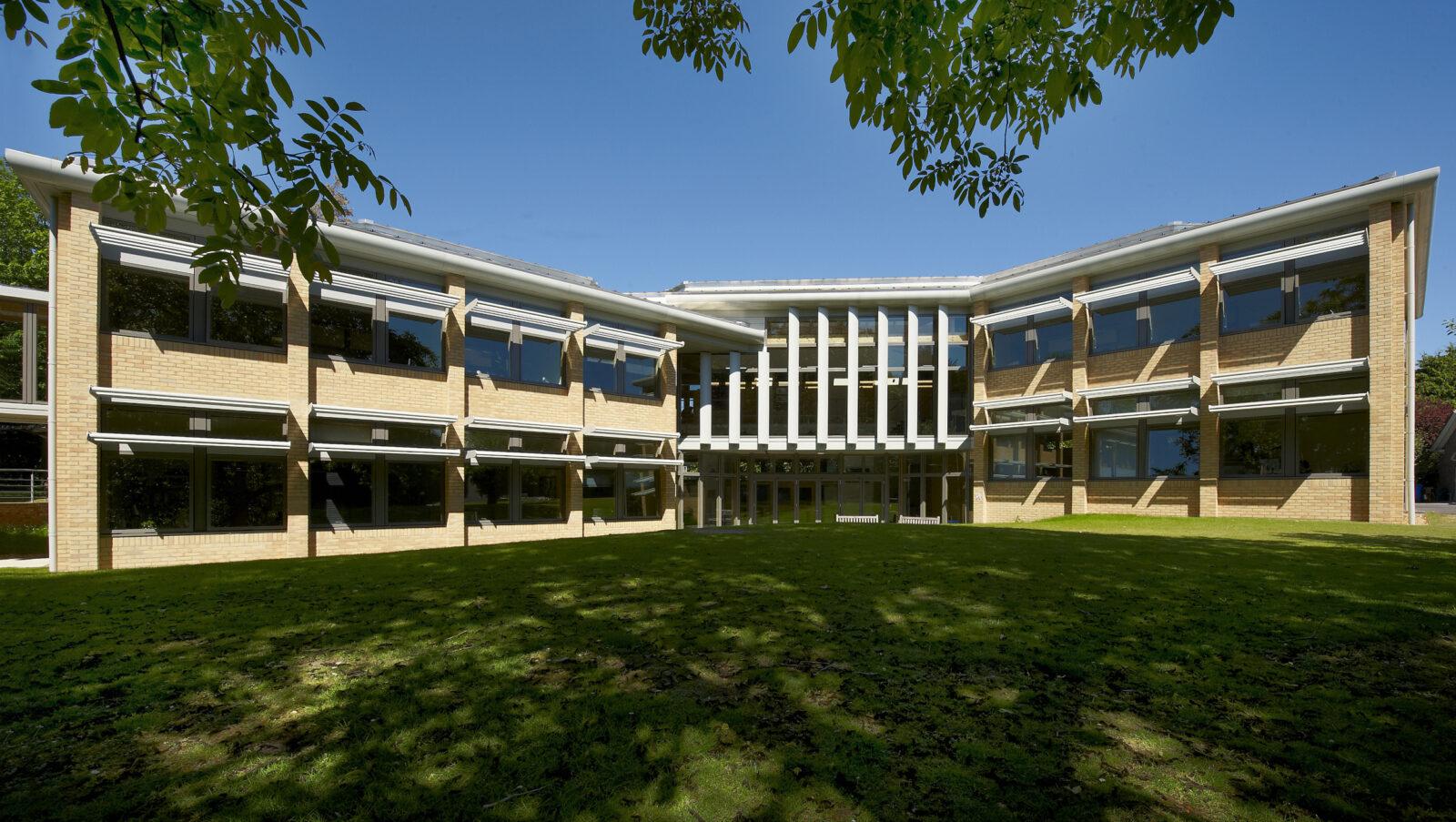
Next autumn, a young scientist will arrive at the University of Cambridge to pursue a passion for understanding the Universe, following in the footsteps of an extraordinary astronomer who began her own scientific journey there more than a century earlier.
Cecilia Payne-Gaposchkin entered Cambridge’s Newnham College in 1919, determined to study physics at a time when opportunities for women in science were limited. Just six years later, she proposed that stars are composed primarily of hydrogen and helium, one of the most important discoveries in modern astrophysics.
Now, a new postgraduate studentship program bearing her name will help future generations of exceptional young scientists follow their scientific ambitions.
The Kavli–Newnham Cecilia Payne-Gaposchkin Postgraduate Studentship Programme will provide fully funded, four-year doctoral opportunities for selected scholars to pursue research in astrophysics and related fields. Established by the Kavli Institute for Cosmology, Cambridge (KICC) and Newnham College, with support from The Kavli Foundation, the program will recruit one student annually, eventually establishing a rolling cohort of four scholars.
“I hope this program will send a clear message and provide a platform for exceptionally talented women scientists to fulfill their potential, make groundbreaking discoveries and become role models for the next generation,” says Dr. Debora Sijacki, KICC’s newly appointed director.
The new studentship builds on two decades of partnership between The Kavli Foundation and KICC, reflecting the Foundation’s deep commitment to supporting the people and institutions that advance fundamental scientific discovery.
“Cecilia Payne-Gaposchkin was a trailblazer in astrophysics. It is an honor and a privilege for The Kavli Foundation to support this fellowship for accomplished early career female scientists. This partnership with Cambridge University and Newnham College reaffirms our unwavering support and commitment to the excellence of KICC,” says Dr. Cynthia Friend, president and CEO of The Kavli Foundation.

A rich environment for discovery
KICC brings together researchers from three University of Cambridge departments: the Institute of Astronomy, the Department of Physics, and the Department of Applied Mathematics and Theoretical Physics. Researchers combine theoretical models, astronomical observations, advanced instrumentation and computational methods to investigate fundamental questions about the origin, structure and evolution of the Universe.
“At KICC, we engage in a wide range of activities, from leading observational programs to theoretical research and high-performance computing simulations,” says Sijacki. “We can offer early-career researchers involvement in the leading next-generation observational programs and the theoretical interpretation that goes with them.”
Students in the new program will be able to take advantage of supervision and mentorship across KICC’s participating departments, with potential opportunities to work with Kavli Institute Fellows. They will also become members of Newnham College, which has championed women’s education at Cambridge for more than 150 years. Newnham will provide a home for the students during their time at the university and a supportive community of learning, teaching and research.
A legacy of discovery and determination
According to Cecilia Payne-Gaposchkin’s autobiography, she was partly inspired to pursue astronomy by a lecture she attended while at Cambridge, at which astronomer Arthur Eddington described his observations that helped confirm Einstein’s theory of general relativity. She subsequently moved to Harvard, where her 1925 doctoral thesis overturned prevailing assumptions about the chemical composition of the stars in the Universe.
Payne-Gaposchkin’s findings initially met skepticism, and she faced substantial barriers to career advancement because of her gender. Nevertheless, she went on to become the first woman appointed a full professor at Harvard and the first woman to chair a department there.
“In the face of adversity and difficulty, she persevered and showed what an exceptional scientist she was,” says Sijacki. “That’s inspirational to me. The stamina and self-belief to keep going, coupled with the determination to do outstanding science because you know it matters.”
Looking to the future
The studentship program arrives as KICC celebrates its 20th anniversary and enters a new chapter under the leadership of Sijacki, a theoretical astrophysicist who previously served as the Institute’s deputy director alongside former director Dr. Anthony Challinor.
Her research uses advanced computer simulations to investigate how galaxies and larger cosmic structures form and evolve, including the role of supermassive black holes in shaping their development.
In 2026, Sijacki received the Royal Astronomical Society’s Eddington Medal for her contributions to astrophysics — an award named for the same astronomer whose work inspired Payne-Gaposchkin more than a century earlier.
As director, Sijacki hopes to strengthen collaboration across KICC’s three participating departments while pursuing emerging scientific opportunities.
Among the areas she sees as particularly promising are time-domain astronomy, which explores how astronomical phenomena change over time, and multi-messenger astronomy, which combines gravitational waves, light and other signals to investigate cosmic events.
These emerging fields offer new ways to study the Universe and draw on KICC’s strengths in observation, theory and computation.
Sijacki also hopes to strengthen scientific connections across the international network of Kavli Institutes. Earlier this year, KICC hosted the first-ever Kavli Institute Astrophysics Symposium, bringing together researchers from around the world to exchange ideas and explore opportunities for collaboration.
“There was a lot of buzz and excitement,” Sijacki recalls, adding that she hopes those conversations may lead to joint research projects, visiting researcher exchanges and opportunities for trainees to connect with scientists at other Kavli Institutes.
–
Learn more about the Kavli-Newnham Cecilia Payne-Gaposchkin Postgraduate Studentship Programme. Applications are open until Dec. 8, 2026.