How Nature Responds to Stress
Two Scialog® collaborations are comparing species across the animal kingdom to uncover the biological principles governing how nervous systems and the brain respond to environmental stress.

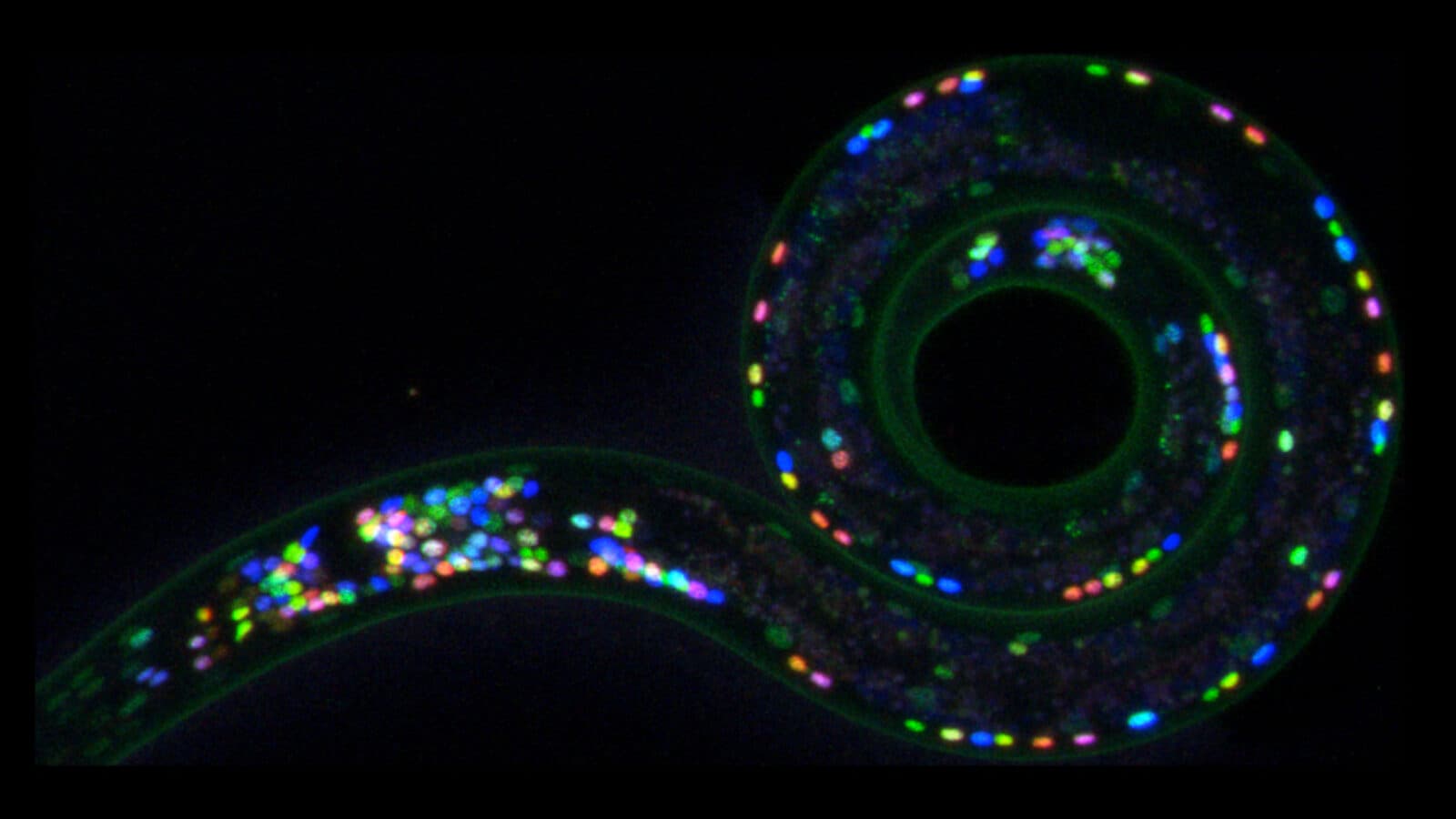
Environmental change is placing pressure on nervous systems across the animal kingdom. Rising temperatures, pollutants and other stressors are altering the ecosystems that animals have adapted to over millions of years.
Researchers know that different organisms respond to these pressures in different ways. What remains unclear is whether nervous systems also share common biological signatures of environmental stress — and whether coping with that stress carries hidden consequences later in life.
Those questions are driving two new collaborations funded through Scialog®: Neurobiology and Changing Ecosystems, a program that Research Corporation for Science Advancement (RCSA) leads and The Kavli Foundation and other philanthropic partners support. Scialog®, short for “science” and “dialog,” brings together early-career researchers from different disciplines to pursue ambitious scientific questions.
The two collaborations tackle very different scientific questions. One focuses on molecular changes that may reveal when a nervous system is under stress; the other explores whether developing more rapidly under warmer conditions carries hidden biological costs. Yet, they share a powerful approach. Both teams are comparing species across hundreds of millions of years of evolution in search of biological principles that extend beyond any one animal rather than limiting themselves to a single-model organism.
“The intention of Scialog® is to understand how nature figures things out,” says Valerie Tornini, a developmental biologist at the University of California, Los Angeles who is an investigator on both projects. “Nature isn’t just one species. By looking across different organisms, we can start to uncover the unifying principles — or discover how they diverge. I think that’s really important.”
Is there a universal marker of neural stress?
A major challenge in studying animals in changing environments is measuring what’s happening inside their nervous systems. Unlike with body temperature or heart rate, scientists can't readily measure neural stress in wild animals.
At Michigan State University, microbiologist Elizabeth Heath-Heckman studies bobtail squid — tiny, bioluminescent cephalopods that rely on beneficial bacteria to produce the glow they use for camouflage. Like other cephalopods, bobtail squid are known for unusually high levels of RNA modification in their nervous systems. Heath-Heckman’s squid favor one form of RNA modification known as A-to-I editing; collaborator Ina Anreiter (University of Toronto) studies m6A RNA methylation, another modification linked to environmental stress, in fruit flies.
Thanks to Tornini’s complementary expertise in zebrafish neurobiology, the Scialog® team can ask whether these molecular changes represent a universal biological signature, or biomarker, of a nervous system under stress. Specifically, the researchers plan to test whether heat and per- and polyfluoroalkyl substances (PFAS, or “forever chemicals”) trigger similar RNA changes in bobtail squid, fruit flies and zebrafish.
“We don’t know whether these responses are conserved across different groups of animals,” Health-Heckman says. “This project lets us test how generalizable they are and whether they can be used as a biomarker for stress — and if so, what stressors are we talking about.”
If successful, the project could eventually make it possible to detect signs of neural stress in animals in the wild, using blood samples.
“Our blue-sky idea is that you could actually go into the field, take blood from a wild animal, and check its rates of RNA modification,” says Heath-Heckman. “That could tell us whether its nervous system is under stress in a non-invasive way.”
Does developing faster come with hidden tradeoffs?
Where the first Scialog® project focuses on how scientists can recognize stress, the second asks what an animal’s response to stress may ultimately cost.
Warm temperatures can dramatically speed up development in many cold-blooded animals (ectotherms), whose body temperatures are largely determined by their surroundings. For the tiny nematode worm Caenorhabditis elegans, a widely used model species in neuroscience research, raising the temperature from 20°C to 25°C shortens the journey to adulthood from about three days to two. In contrast, warm-blooded animals (endotherms) develop at a much more tightly controlled pace, unaffected by outside temperature. Why?
“The whole point is to grow up and proliferate,” says Eviatar (Ev) Yemini, a neurobiologist at UMass Chan Medical School. “If you can do it that fast, why go slow?”
Higher temperatures are known to accelerate development in many species. Yemini and his collaborators Ling Hao (University of Maryland) and Tornini are investigating whether accelerated neurodevelopment leaves nervous systems more vulnerable later in life. By studying worms and zebrafish alongside human-derived neurons, they will ask why evolution has taken these different approaches in endotherms and ecototherms. Have warm-blooded animals evolved molecular safeguards that deliberately limit the pace of nervous system development? If so, what are those protective mechanisms, and do multiple species share any
One possibility, Yemini says, is that evolution has imposed speed limits on development for a reason.
“One hypothesis is that if you build it fast, you don’t build it to last,” he says. “Maybe there are mechanisms in place to ensure neurons are constructed in a way that makes them more robust against degeneration. By building things fast, we may bypass that.”
These two Scialog® projects are both searching for the unifying principles that govern nervous systems across the animal kingdom. But they also have something else in common. Many of the researchers first met at the inaugural Scialog®: Neurobiology and Changing Ecosystems in 2025. Scialog® brings Fellows back together over the initiative’s three years, giving ideas and scientific relationships time to develop. At the 2026 meeting, their conversations continued, new collaborators joined and their ideas evolved into the projects funded that year.
“One cannot build these networks instantly; they take time to develop and evolve,” says Andrew Feig, senior program director at RCSA. “Pairs of Fellows may meet, but to make the project work, they may need a third person who holds another piece of the intellectual puzzle. This is the power of networks.”
Yemini agrees. “I love being part of a team where the other members are really, really smart, and you learn how they think and approach problems,” he says. “To me, that’s the joy of science. I love the fact that Scialog® and Kavli have enabled that.”